

In the fast-changing world of food service and hospitality, rethinking packaging solutions innovatively has become indispensable. From cafés and bakeries to large-scale catering services, more operators are exploring alternatives to plastic, which often end up in landfills or the ocean. Compostable packaging has emerged as one of the most promising sustainable packaging solutions. They offer a way to complete the sustainability loop, turning waste into value rather than pollution.
What Is Compostable Packaging?
Compostable packaging is crafted from renewable, plant-based materials such as potato starch, tapioca starch, or cellulose. Unlike traditional plastic packaging that can take centuries to decompose, compostable materials are designed to break down naturally when exposed to the right conditions — heat, moisture, oxygen, and microbial activity.
When products like compostable plates, boxes, or bags reach the end of their life, they can be sent to an industrial composting facility. There, through controlled composting processes, they decompose within a few months, turning into nutrient-rich compost that enriches the soil and supports agriculture.
Types of Compostable Packaging
Bagasse (Sugarcane Fibre)
Bagasse is a by-product of sugarcane processing. It’s sturdy, heat-resistant, and grease-resistant, making it ideal for plates, clamshell boxes, bowls, and trays used in food service. Bagasse packaging can handle both hot and cold foods without losing shape or texture. It is partially home compostable, though it breaks down more efficiently in industrial composting facilities.
Palm Leaves
Naturally strong and biodegradable, palm leaves are moulded into dining plates, serving bowls, and platters. They lend a premium, natural appearance to packaging while maintaining rigidity and durability for heavier food items. However, palm leaf products cannot be composted efficiently at home because they require higher temperatures, typically found in industrial composting setups.
Paper and Cardboard (Coated with Compostable Film)
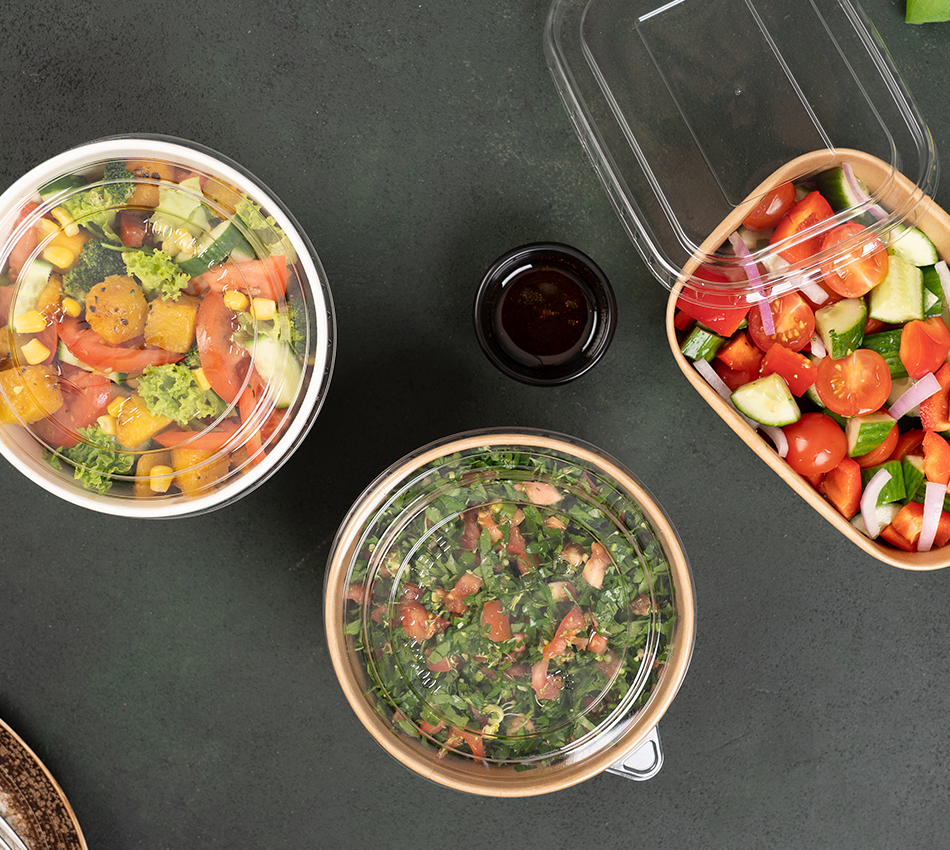
Reinforced paper or cardboard lined with a compostable PLA film is commonly used for takeaway boxes, coffee cups, and bakery packaging. This combination provides excellent structure and moisture resistance without relying on plastic lamination. These materials can be composted in personal or community composting facilities under the right conditions.
Potato Starch
Potato starch-based materials are molded into carry bags, plates, serving trays, and meal containers. They are lightweight yet durable, offering a dependable alternative to plastic for both dry and moist foods. Potato starch packaging is home compostable and decomposes naturally within a few months when exposed to moisture and heat.
Benefits of Compostable Packaging
Spill-proof, Sturdy build, and Versatile Options:
When it comes to switching to sustainable packaging, one of the first concerns businesses raise is practicality. Can compostable packaging handle hot, cold, or oily food without falling apart? Will it tear or lose shape when carrying heavy items? These are valid questions.
Be it meal boxes, coffee cups, other cutlery, or carry bags, the benefits of compostable packaging absolutely align with the most demanding packaging needs. Choosing compostable, sustainable food packaging means guaranteed spill-proof, grease-resistant, and temperature-tolerant options, ideal for holding hot curries, chilled desserts, or even heavy takeaway meals. For non-eatables, the compostable packaging offers strength for carrying heavy items upto a certain extent.
So choosing sustainability also means choosing durability and convenience.
Enhances Brand Credibility and Customer Trust:
Informed modern-day consumers value businesses that act responsibly. Using sustainable food packaging communicates that your brand isn’t just serving great food but also taking tangible eco-conscious steps.
This shift reinforces your brand reputation and credibility with consumers as well as with B2B partners and networks that value collaboration with environmentally responsible businesses.
Small Switch, Big Environmental Impact:
A change in the kind of packaging you use might seem like a small operational detail. But it’s often these small decisions that lead to the biggest wins. Attention to such details becomes a true differentiator. It reflects a business built on responsibility, not just to chase profitability.
By choosing compostable packaging, businesses actively contribute to a circular economy, i.e., everything borrowed from nature to make our lives convenient ultimately returns to nature rather than ending up as waste in landfills.
From manufacturing to disposal, every stage of compostable packaging supports more innovative waste management. Rather than choking the environment, the disposable items generated by your business enter a regenerative cycle and become a valuable resource.
Challenges of Compostable Packaging
Compostable and sustainable food packaging comes with a few challenges that businesses must plan for to make the switch effective and meaningful.
Cost Considerations
Despite the compostable packaging benefits, it generally has a higher upfront cost than traditional plastics. However, these costs often offset each other through brand value, compliance readiness, and customer loyalty.
Businesses that make sustainability part of their brand story can justify slightly higher pricing while strengthening their market position. Over time, as demand and production scale increase, compostable materials are expected to become more cost-competitive.
Limited Awareness Among Consumers
Even when businesses adopt compostable packaging, customers may not know how to dispose of it correctly. Without awareness or access to composting bins, the sustainable food packaging might still end up in general waste.
To overcome this, hospitality brands can use simple on-pack messaging such as “Compostable where facilities exist” or display QR codes that link to disposal information. Educating customers is a crucial step to ensure your sustainability efforts really pay off.
Making Compostable Packaging Work for Your Business
Switching to compostable packaging is not just a product decision but a strategic one. To make it effective:
Educate consumers about composting
Many consumers are still unaware of how compostable packaging should be disposed of. Use clear labels, signs, or short messages on packaging to guide them on how to compost and why it matters. Awareness ensures your efforts don’t end up in regular waste streams.
Choose the right materials
Select materials that are home compostable or partially home compostable based on your product needs. Work with certified suppliers who can help you balance sustainability with performance, ensuring packaging remains practical for everyday use.
Evaluate your waste management setup
Check if composting facilities are available locally or through your waste management partners. If not, consider collaborations that enable responsible disposal. Start small by introducing compostable packaging in select menu categories, such as beverages or desserts, before a complete rollout.
Train your staff
For in-house use, train your team to handle, sort, and dispose of compostable packaging correctly. Transparent processes help prevent contamination and make the composting system work effectively.
Market your efforts
Share your sustainability story with customers and B2B clients through your digital platforms, packaging, or in-store displays. Consumers appreciate transparency and genuine efforts. It builds loyalty and positions your brand as a responsible, forward-thinking business.
Compostable packaging is more than an environmental initiative. It is also a forward-thinking business strategy for food service operators, restaurants, cafés, and large-scale caterers. By understanding the benefits of compostable packaging and aligning sustainability with everyday practicality, businesses can meet evolving customer expectations while staying compliant with eco-conscious regulations and market trends.
Although the transition requires planning and initial investment, the long-term rewards far outweigh the challenges. Embracing compostable packaging helps businesses reduce waste, support the circular economy, and demonstrate a genuine commitment to both people and the planet.
FAQs
What are the types of sustainable packaging?
Sustainable packaging includes a range of eco-friendly materials designed to reduce waste and environmental impact. Common types include compostable packaging made from bagasse, paper, palm leaves, or starch; biodegradable packaging that breaks down naturally over time; recyclable materials like cardboard and aluminium; and reusable solutions such as cloth or glass containers. Each option helps minimise landfill waste while aligning with global sustainability goals.
What are the benefits of composting waste?
Composting waste helps convert organic materials into nutrient-rich soil, reducing landfill pressure and methane emissions. For businesses, it supports cleaner waste management systems, lowers disposal costs, and contributes to sustainability goals. In hospitality and food service, composting also enhances brand reputation by showing tangible environmental responsibility, turning waste into a resource that benefits both the planet and the community.
What is the difference between compostable and biodegradable packaging?
Both compostable and biodegradable packaging break down naturally, but compostable materials decompose faster under specific conditions to produce nutrient-rich compost. Biodegradable packaging, on the other hand, may take longer and doesn’t always leave behind beneficial by-products. Simply put, all compostable packaging is biodegradable, but not all biodegradable packaging is compostable. Compostable options ensure cleaner, more sustainable decomposition.
How can businesses dispose of compostable packaging responsibly?
The best approach is to partner with local composting facilities or waste management services that accept compostable materials. Businesses can also install separate compost bins for food and packaging waste to prevent contamination. Clear signage, proper staff training, and customer awareness go a long way in ensuring compostable items are disposed of correctly at the consumption end.
What’s the main difference between recyclable and compostable packaging?
Recyclable packaging is processed to make new products, while compostable packaging decomposes naturally to enrich soil. Recycling extends material life but requires sorting and energy-intensive processing. Compostable packaging, on the other hand, completes the natural cycle by returning to the earth safely. Both are sustainable, but compostable options reduce waste at the source.